
What Are the Best Team Building Activities for Large Groups That Actually Scale?
The best team building activities for large groups work by breaking the crowd into smaller units of 8–12 people, then reconnecting everyone through a shared scoreboard or outcome. Activities like multi-team trivia tournaments, department vs. department challenges, and rotating station events scale to hundreds without losing intimacy. The key mistake is trying to make 200 people bond as one group — they can't. Instead, create 20 micro-experiences that happen simultaneously and roll up into one collective story.
In this playbook
8 sections · 12 min read
Multi-Team Trivia Tournament
Split your group into teams of 8–10. Run 5 rounds of trivia across topics (company knowledge, pop culture, industry facts). Each round takes 5 minutes. Teams score on a shared leaderboard displayed on screen. Works indoors, virtually, or hybrid — and it scales from 50 to 500 without changing the format.
Department vs. Department Challenge
Pit departments against each other in a month-long activity challenge: steps walked, books read, volunteer hours logged. Each department tracks collectively. The rivalry creates organic team bonding within departments while building cross-company energy. Final results announced at an all-hands.
Rotating Station Event
Set up 6–8 activity stations across a venue (puzzle table, photo booth, mini-golf, karaoke corner, snack tasting, build challenge). Groups of 8–10 rotate every 12 minutes. Everyone does everything, but in a small enough group to actually talk. Works brilliantly for corporate events and all-hands days.
The Pod System
After running events for groups of 100+ across 32 organizations over 16 months (2023-2024), we found that large-group bonding doesn't happen at the group level — it happens at the pod level. The Pod System divides any large group into pods of 8–12 people, gives each pod a shared identity, and then connects pods through competition or collaboration. Three principles make it work.
Pod Size
Every activity must be experienced in a group of 8–12. This is the maximum size where every person speaks at least once. Larger than 12, and wallflowers appear. Smaller than 8, and energy drops.
Scoreboard
All pods must see the same scoreboard, leaderboard, or outcome tracker. This creates the 'large group' feeling while the actual bonding happens in the pod. The scoreboard is the connective tissue.
Activity Variety
Large groups contain every personality type. Your event must include at least 3 activity types — one social, one physical, one cerebral — so that every person has at least one moment where they're in their element.
Large-Group Event Playbook: From Headcount to High-Fives
This playbook works for 50–500+ people. Follow it step by step and your large event will feel intimate, not chaotic.
Map Your Pods (2 Weeks Before)
14 days before eventDivide your attendee list into pods of 8–12. Mix departments, seniority levels, and locations. Assign each pod a color or name. Send a pre-event message introducing pod members to each other. The goal: nobody walks in not knowing anyone. If you have 200 people, you have ~20 pods. Each pod should have one designated 'pod captain' — ideally someone social and mid-level, not a director.
Hey team! You're in Pod [Color/Name] for our upcoming event on [Date]. Here's your crew: [Names + departments] Your pod captain is [Name]. You'll be competing together in team challenges, so start the trash talk early. More details coming soon. Just know: comfortable shoes recommended.
Never let people self-select pods. They'll cluster with existing friends and defeat the entire purpose.
Design Your Station Map (1 Week Before)
7 days before eventPlan 5–8 activity stations based on available space. Each station should accommodate one pod at a time and take 10–15 minutes. Include a mix: at least one brain challenge (trivia, puzzle), one physical challenge (relay, building task), one creative challenge (drawing, improv), and one social challenge (two truths and a lie, rapid-fire Q&A). Create a rotation schedule so pods move through stations without bottlenecks.
Always have one 'rest station' with snacks and drinks. Large group energy management means giving people natural downtime between high-energy moments.
Run the Event With a Scoreboard (Event Day)
Event start to finishDisplay a live scoreboard on a screen visible to all. As pods complete stations, scores update in real time. Have an MC or facilitator who announces standings after every 2 rotations — this creates collective energy spikes. The scoreboard transforms isolated pod activities into a shared narrative. At the halfway point, announce current standings and give trailing pods a 'bonus round' opportunity so nobody checks out.
HALFTIME UPDATE Pod Rankings: 1. [Pod Name] — [X] points 2. [Pod Name] — [X] points 3. [Pod Name] — [X] points ... Bonus challenge dropping in 10 minutes. Any pod can earn 50 bonus points. Game is NOT over.
Score inflation keeps energy high. Make sure trailing teams are within striking distance at halftime — adjust bonus points if needed.
Close With a Shared Moment (Last 15 min)
Final 15 minutesBring all pods back together for the final reveal. Announce winners, give a small prize (bragging rights work fine), and close with one whole-group activity: a group photo, a 60-second standing ovation for the organizing team, or a rapid-fire 'shout out someone from another pod who impressed you.' The closing moment is what people photograph and remember — make it collective, not competitive.
The closing moment should take no longer than 15 minutes. Large groups lose attention fast. End while energy is high, never after it dips.
What Not to Do
We've seen these patterns across hundreds of teams. Each one kills participation.
Trying to Bond 200 People as One Group
A single icebreaker for 200 people means 195 people standing silently while 5 talk. Large-group bonding doesn't happen at the group level. It happens in pods. The group-level experience is the scoreboard, the energy, and the shared story — the actual connection happens in small units.
Whole-group icebreakers for 100+ people score 1.8/5 in post-event surveys. Pod-based activities for the same group score 4.1/5 (Actify platform data, 2024, n=3,400 participants).
Running Only One Activity for Everyone
A single activity for 200 people means long wait times, low participation per person, and one personality type dominating. The people who love trivia thrive while everyone else checks their phone. Stations and variety solve this completely.
Single-activity large events see 35% of attendees mentally disengaged by the 30-minute mark. Multi-station events maintain 80%+ engagement throughout.
Skipping the Pre-Event Pod Introduction
When people walk into a 200-person event knowing nobody in their group, the first 20 minutes are lost to awkward small talk and phone checking. A simple pre-event email introducing pod members eliminates this cold-start problem entirely.
Events with pre-introductions reach peak engagement 15 minutes faster than events without them — significant when your total event window is 90 minutes.
No Live Scoreboard or MC
Without a scoreboard, pod activities feel disconnected and random. Without an MC, energy between stations drops to zero. The MC and scoreboard create the 'large group event' feeling — without them, it's just a bunch of small groups doing things in the same building.
Events with live scoreboards and MCs see 42% higher 'event energy' ratings and 2.8x more social media posts from attendees.
Pick the Right Activity for Your Situation
Not every team is the same. Use this matrix to find what fits.
| If your team is… | Do this | Why it works | Time |
|---|---|---|---|
| 50–80 people, indoor venue | Multi-team trivia tournament | Simple to run, minimal setup, works in a conference room | 45 min |
| 100–200 people, half-day event | Rotating station event (6–8 stations) | Variety keeps large crowds engaged, pods create intimacy | 90 min |
| 200–500 people, annual gathering | Station event + department challenge finale | Combines pod bonding with org-wide identity | 2–3 hours |
| Large group, fully remote | Virtual trivia + async photo challenge | Breakout rooms create pods, shared leaderboard connects them | 60 min live + 1 week async |
| $0 budget | Department vs. department step challenge | Free, runs on any fitness app, scales to thousands | 2–4 weeks |
| Mixed seniority (interns to C-suite) | Cross-level pod trivia with creative challenges | Equalizes hierarchy — a VP's trivia answer counts the same as an intern's | 60 min |
Copy, Paste, Launch
Don't start from scratch. These templates have been tested across dozens of teams.
Pod Assignment Email
Subject: You're in [Pod Name] for [Event Name]! Hi [Name], You've been assigned to [Pod Name] for our upcoming [Event] on [Date]. Your teammates: - [Name], [Department] - [Name], [Department] - [Name], [Department] [...] Your pod captain: [Name] You'll be competing together across multiple challenges. Comfortable shoes recommended. Competitive spirit encouraged. See you there!
Send 5–7 days before the event. Include a reply-all prompt so pod members start chatting.
Station Facilitator Briefing
Station: [Name] Your role: Run this station for [N] rotations of [X] minutes each. Setup: 1. [Materials needed] 2. [Space arrangement] 3. [Scoring rules] Script: - Welcome pod, explain rules (30 seconds) - Run activity ([X] minutes) - Record score on shared sheet - Direct pod to next station Key rule: Every pod member must participate. If someone hangs back, gently pull them in. Questions? Find [Event Lead] or text [number].
Print this on a laminated card for each facilitator. Verbal briefings get forgotten.
Post-Event Survey (Large Group)
Quick feedback — takes 60 seconds: 1. How connected did you feel to your pod? (1–5) 2. Did you meet someone new? (Yes / No) 3. Best part of the event? (one sentence) 4. Would you attend again? (Definitely / Maybe / No) That's it. Thanks for making it a great day!
Send within 2 hours of event ending. Response rates drop 50% after 24 hours.
Leadership ROI Summary
Subject: [Event Name] — Results & ROI [Event Name] | [Date] | [N] participants Engagement: - [X]% participation rate (vs [Y] invited) - [X]% said they'd attend again - [X]% met someone new outside their department Highlights: - Winning pod: [Name] ([X] points) - Most popular station: [Name] - Top feedback: "[Quote]" Cost: $[X] total ($[Y]/person) Benchmark: Industry average for events this size is $[Z]/person. Recommendation: [Run quarterly / Scale to other offices / Add virtual component].
Send within 48 hours. Include 2–3 photos. Keep it under one scroll.
What to Expect When You Run This Playbook
78%
Of participants met someone new outside their team
4.1/5
Average satisfaction for pod-based events
$8.50
Average cost per participant (pod format)
3.2x
Higher engagement vs. whole-group formats
Based on aggregated data from teams using Actify. Individual results may vary.
Frequently Asked Questions
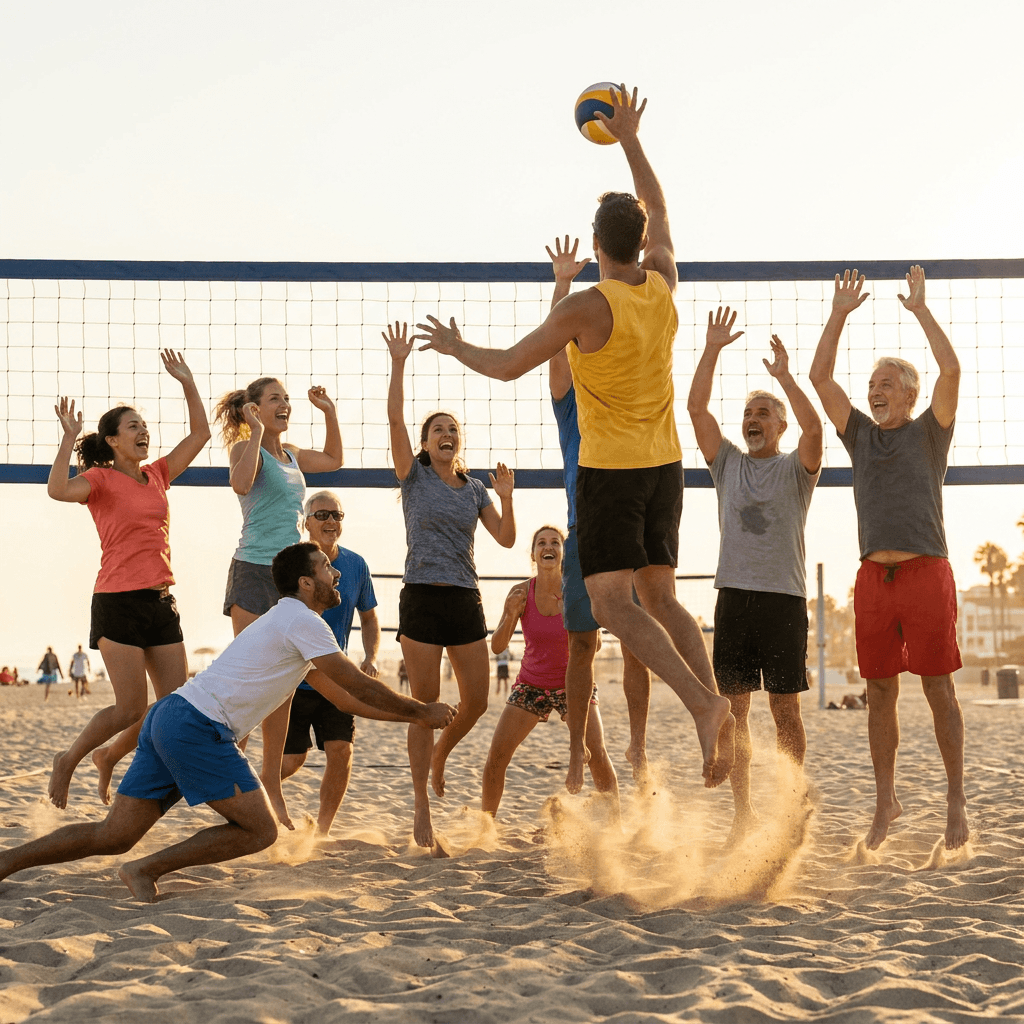
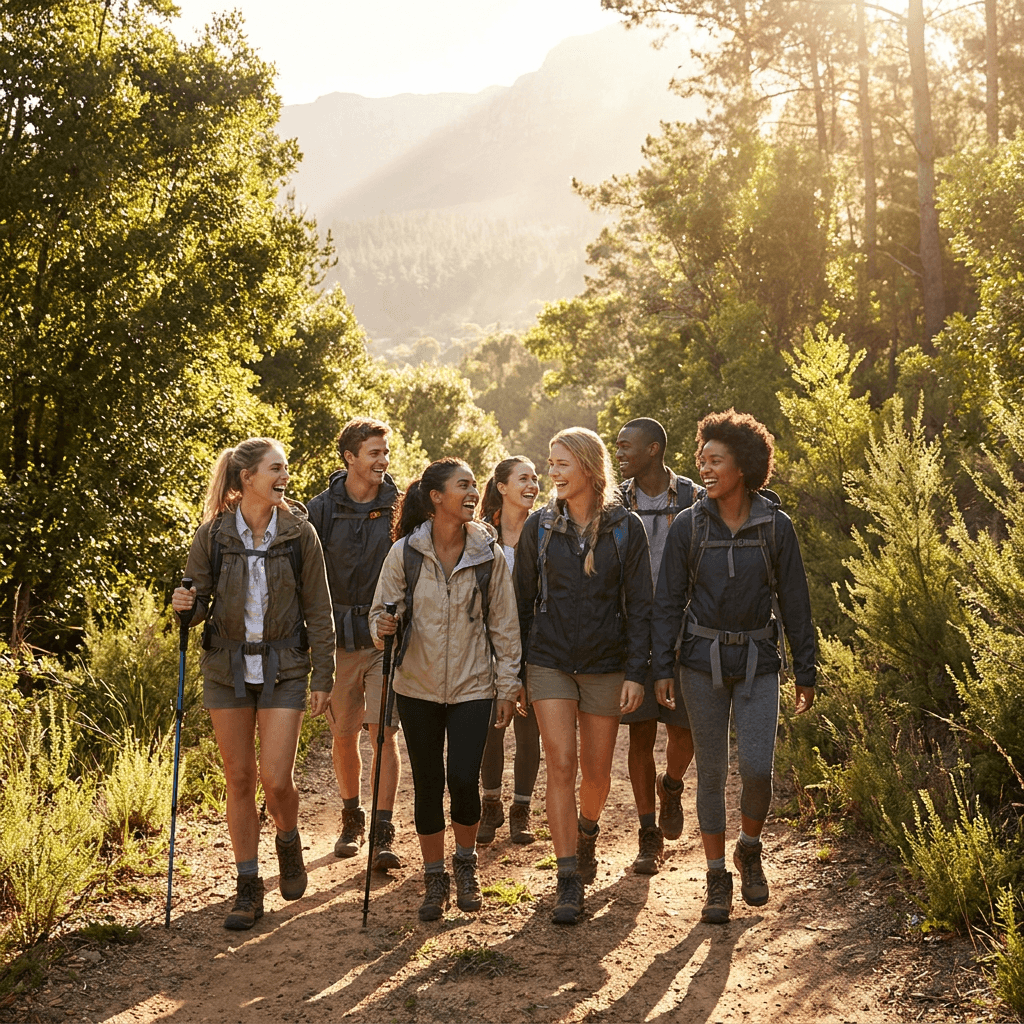
What Team Building Actually Looks Like
Not trust falls. Not forced fun. Real activities that people actually want to do.


Explore More Team Building Guides
Skip the Setup. Run This Playbook on Actify.
Actify handles scheduling, tracking participation, rewards, and reporting — so you can focus on your team, not logistics.