
How Do You Run a Scavenger Hunt for Team Building That's Actually Fun for Adults?
The best team building scavenger hunts work because they force real-time collaboration under a time constraint — something no ice-breaker can replicate. For adults, skip the childish item lists and focus on challenge-based hunts: tasks that require teams to solve clues, create content, and make decisions together. The winning formula is 10-15 challenges, a 45-minute time limit, and a mix of physical (go find it), creative (make something), and knowledge (figure it out) tasks. The time pressure does the bonding work — you discover who leads, who strategizes, and who improvises.
In this playbook
8 sections · 12 min read
Office Photo Hunt
Teams get a list of 15 photo challenges: 'a team selfie in front of the oldest thing in the office,' 'someone using office supplies as a hat,' 'recreate a famous album cover.' Each photo is worth 1 point, creative bonus points awarded by judges. Takes 30 minutes, uses every corner of the office, and produces hilarious content for the team channel.
Neighborhood Treasure Hunt
Teams explore a 4-block radius around the office with clue cards that lead to specific landmarks, shops, or public spots. Each location has a challenge: take a photo, answer a question about the spot, or interact with something. Gets people outside, exploring their work neighborhood, and working as a unit under time pressure.
Virtual Scavenger Hunt
Remote teams race to find items in their homes, solve internet-based puzzles, and complete creative challenges on camera. 'Show us something blue,' 'find something older than you,' 'take a screenshot of a specific webpage.' Works for fully remote teams and creates the same energy as in-person hunts when the time pressure is tight (20-second windows per item).
The Hunt Triangle
After designing and analyzing 150+ scavenger hunts (Actify platform data, 2024, n=156), we identified three challenge types that must be present for the hunt to create real team bonding — not just entertainment. Most hunts fail because they're all 'find' tasks. Finding things is mildly fun but requires no collaboration. The Hunt Triangle ensures every hunt forces teams to think, move, and create together.
Discovery Tasks
Classic scavenger hunt tasks: locate a specific object, reach a landmark, find a hidden clue. These create movement and urgency. They're the skeleton of the hunt — necessary but insufficient alone.
Puzzle Tasks
Riddles, codes, logic problems that unlock the next clue or earn bonus points. These require the team to think together — someone spots the pattern, someone tests the theory, someone records the answer. Intellectual collaboration under time pressure.
Creative Tasks
Tasks where the team must produce something: a photo, a short video, a drawing, a pitch. These are the bonding peak — they require vulnerability, coordination, and shared ownership of the result. The team photo recreating the last supper is the moment people remember 6 months later.
Scavenger Hunt Playbook: Design, Run, and Score a Team Hunt
Everything you need to run a scavenger hunt that adults actually enjoy — from clue writing to scoring to post-hunt follow-up. Works indoor, outdoor, and virtual.
Design the Hunt (3–5 Days Before)
Planning phaseWrite 12-15 challenges using the Hunt Triangle: 5 Find tasks, 4 Solve tasks, 3 Create tasks, and 2-3 bonus tasks for teams that finish early. Map out the physical route if outdoor — ensure it's walkable in the time limit. For indoor hunts, use all floors and common areas. Assign point values: Find tasks = 1 point, Solve tasks = 2 points, Create tasks = 3 points. This weights collaboration and creativity over speed.
FIND tasks (1 pt each): 1. Take a team photo at [landmark] 2. Find and photograph [specific item] 3. Locate the [hidden clue at location] 4. Get a business card from [nearby shop] 5. Find something that represents your team's vibe SOLVE tasks (2 pts each): 6. Decode this message: [cipher/riddle] 7. Answer these 3 questions about [location/company] 8. Solve the puzzle to find the next clue location 9. Calculate [something] using info found at [spot] CREATE tasks (3 pts each): 10. Recreate [famous photo] as a team 11. Film a 15-second commercial for [product/company] 12. Build the tallest structure using [materials provided] BONUS (5 pts each): 13. [Hardest challenge — requires all skills] 14. [Creative wildcard — most original wins]
Test every clue yourself before the event. If you can't solve it in 2 minutes, your teams won't solve it in 1.
Prepare Materials and Teams (Day Before)
24 hours beforePrint clue sheets (one per team). Prepare any physical props — hidden envelopes, locked boxes, materials for build challenges. Assign teams randomly (4-5 people per team). Name the teams or let them name themselves at kickoff. Prepare the scoring sheet. Designate a 'home base' where teams return when time is up. If virtual, set up a shared Google Doc or Slack channel where teams submit their evidence.
Stagger team start times by 2 minutes if using the same route. This prevents teams from following each other and copies the hunt feel of being 'alone together.'
Launch and Monitor (Hunt Day)
Event timeBrief all teams in 3 minutes: here are the rules, here's the time limit, here's where to return. Start the clock. During the hunt, stay at home base and monitor submissions (for virtual) or be available by phone (for outdoor). Send a '15 minutes remaining' message to all teams. When time is up, it's up — teams returning late lose 2 points per minute. Strict timing creates the urgency that makes the hunt feel consequential.
Your hunt starts NOW. Timer: [X] minutes. Rules: - Complete as many challenges as possible before time runs out - Photo/video proof required for every task - Submit evidence to [channel/doc/email] - Late return = -2 points per minute - Creativity counts: judges award bonus points for style Meeting point: [Location] at [End time] Go. The clock is ticking.
Play a dramatic countdown sound effect when launching the hunt. It sounds silly but it genuinely increases urgency and excitement.
Score and Celebrate (Post-Hunt)
Immediately after teams returnScore the submissions on the spot — speed matters because the energy is still high. Display the best photos and videos on screen while you tally. Announce winners with mock awards: 'Best Photo,' 'Most Creative Solution,' 'Fastest Team,' 'Best Dressed.' Share all the best submissions in the team channel that afternoon. The content from the hunt becomes shared team lore — people reference it for months.
Hunt results are in! Overall winner: [Team Name] — [Score] points Best photo: [Team Name] — [which challenge] Most creative: [Team Name] — [which challenge] Best comeback: [Team Name] — [story] All photo evidence is in [channel/album link]. Some of these are going in the next all-hands. Next hunt: [Date or 'stay tuned'].
If you're on Actify, the platform handles team assignment, clue distribution, photo submission, and auto-scoring — you just design the challenges.
What Not to Do
We've seen these patterns across hundreds of teams. Each one kills participation.
Making the Hunt Too Easy
A scavenger hunt where every team finishes with 20 minutes to spare isn't a hunt — it's a walk. The time constraint is the engine of collaboration. Design the hunt so that finishing 80% of challenges in the time limit is a strong performance. Teams that feel time pressure make faster decisions together, which is where the bonding happens.
Hunts where all teams finish early score 3.0/5 on excitement. Hunts where the top team barely finishes in time score 4.7/5 (Actify platform data, 2024, n=1,800 participants).
Only 'Find' Tasks (No Puzzles or Creative Challenges)
A list of items to locate is a checklist, not a hunt. Without puzzle tasks that require thinking and creative tasks that require producing something, teams just split up and run in different directions. The Hunt Triangle exists because Find + Solve + Create forces the team to work together, not just near each other.
Find-only hunts see teams split into individuals 70% of the time. Hunt Triangle hunts keep teams together 85% of the time — because puzzle and creative tasks require group input.
Teams That Are Too Large
Teams of 7+ people during a scavenger hunt means 2-3 people lead and 4-5 people follow. You've created spectators, not participants. The ideal team size is 4-5 — small enough that everyone's input matters, large enough that they can split tasks strategically.
Teams of 4-5 report 91% active participation. Teams of 7+ report 52% active participation — with the same people disengaging every time.
No Scoring System or Consequences
Without points and a leaderboard, the hunt has no stakes. Adults need a reason to push themselves — even if the prize is just bragging rights. Assign point values (with creative tasks worth more), track scores visibly, and announce results dramatically. The competition is the catalyst.
Hunts with visible scoring see 40% more tasks attempted per team and 35% higher satisfaction scores than unscored hunts.
Pick the Right Activity for Your Situation
Not every team is the same. Use this matrix to find what fits.
| If your team is… | Do this | Why it works | Time |
|---|---|---|---|
| First scavenger hunt for the team | Office Photo Hunt (15 photo challenges, 30 min) | Uses familiar territory, zero budget, proves the format works | 30 min |
| Remote or distributed team | Virtual Scavenger Hunt via Slack + video | At-home item hunts + internet puzzles work across any timezone | 25 min |
| Company retreat or offsite | Neighborhood Treasure Hunt with multi-stage clues | Explores the event location and creates shared adventure memories | 60–90 min |
| Team of 30+ people | Multi-route hunt (3 different routes converging at same endpoint) | Prevents teams from following each other; creates separate stories to share | 60 min |
| Budget available ($10-20/person) | Themed treasure hunt with props, locked boxes, and a final prize | Production value increases immersion and makes the experience feel special | 60–90 min |
| Want something quick during a meeting | Micro hunt: 5 photo challenges, 10 minutes, within the building | Burst of energy mid-meeting without major time commitment | 10 min |
Copy, Paste, Launch
Don't start from scratch. These templates have been tested across dozens of teams.
Scavenger Hunt Invitation (Slack/Teams)
🔍 Team Scavenger Hunt — [Day] at [Time] Teams of 4-5 will race to complete challenges around [location]. What to expect: clues, puzzles, photo challenges, and a leaderboard. Duration: [X] minutes (strict cutoff) Wear: Comfortable shoes Bring: Fully charged phone Teams assigned at kickoff. No prep needed. This will be competitive. You've been warned.
The 'competitive' framing actually increases attendance — adults are more likely to show up for a challenge than for 'fun.'
Clue Card Template (Printable)
TEAM: _______________ Challenge [N] — [Find / Solve / Create] [Challenge description] Points: [X] Time estimate: [X] min Proof required: [Photo / Answer / Video] Hint (costs 1 point): [Hint text] Submit to: [Channel / Email / QR code] Next clue location: [Revealed after submission] OR [Provided on card]
Print on colored card stock — each team gets a different color. Makes sorting submissions faster.
Virtual Hunt Submission Thread
SCAVENGER HUNT — SUBMISSION THREAD Post your evidence here. Format: [Team Name] | Challenge [N] | [Photo/Answer/Video] Scoring: - Find tasks: 1 pt - Solve tasks: 2 pts - Create tasks: 3 pts - Bonus tasks: 5 pts - Late submissions: -2 pts/min after deadline Timer ends at [Time]. No exceptions. Good luck. The leaderboard updates live.
For virtual hunts, a single submission thread keeps everything organized. Pin it to the top of the channel.
Post-Hunt Photo Album Message
The evidence is in. Here are the best moments from today's hunt: [Photo 1 description — linked or attached] [Photo 2 description — linked or attached] [Photo 3 description — linked or attached] Full album: [Link] MVP moment: [Description of standout team/person] Most creative submission: [Description] Most debatable ruling: [Description] Final standings: 1. [Team] — [Score] 2. [Team] — [Score] 3. [Team] — [Score] Until next time.
Post within 2 hours of the event while energy is still high. Delayed recaps lose 80% of their engagement impact.
What to Expect When You Run This Playbook
94%
Of participants say scavenger hunts are their favorite team activity
4.6/5
Average satisfaction for Hunt Triangle format
3x
More cross-team interaction than standard team events
6 mo
Average time participants reference hunt memories in conversation
Based on aggregated data from teams using Actify. Individual results may vary.
Frequently Asked Questions
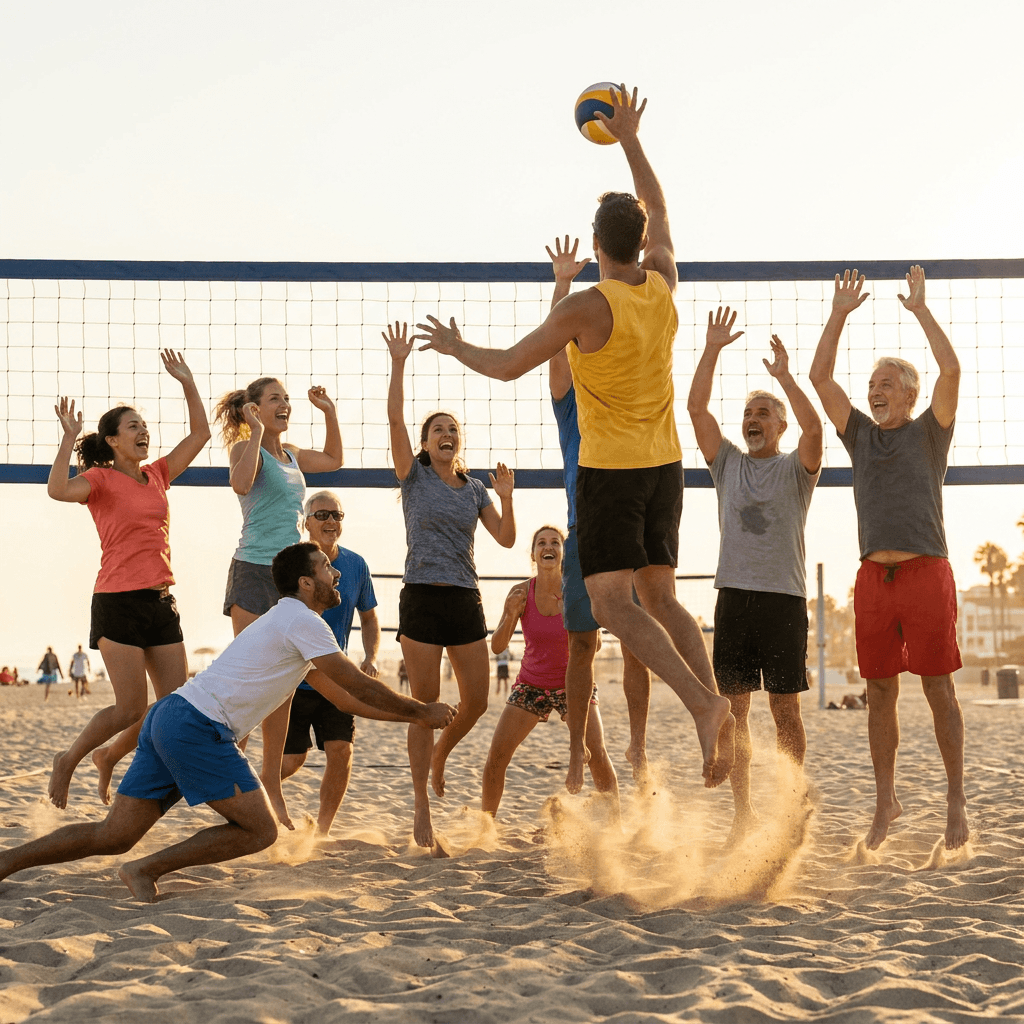
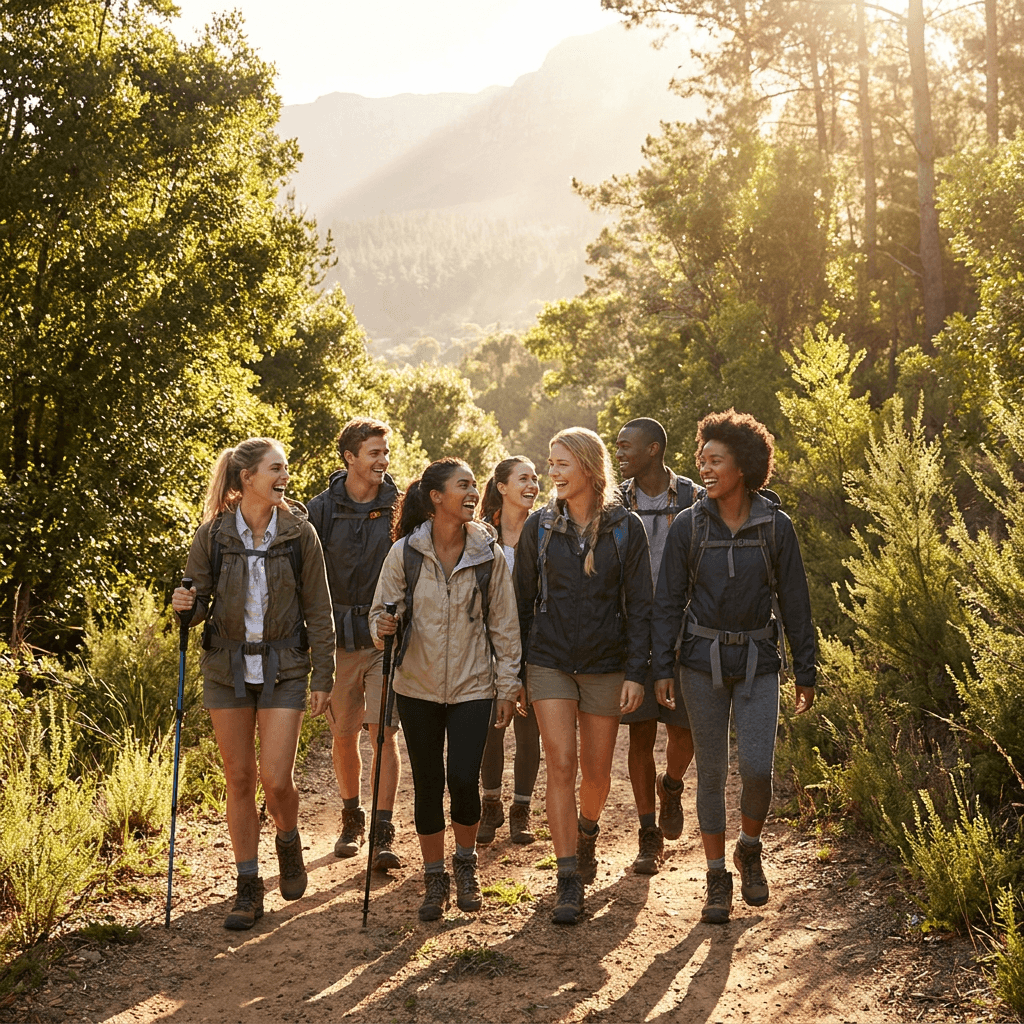
What Team Building Actually Looks Like
Not trust falls. Not forced fun. Real activities that people actually want to do.


Explore More Team Building Guides
Skip the Setup. Run This Playbook on Actify.
Actify handles scheduling, tracking participation, rewards, and reporting — so you can focus on your team, not logistics.