
What Virtual Team Building Activities Actually Get People to Show Up?
The virtual team building activities that actually work share one trait: they don't try to recreate in-person experiences on Zoom. Forcing a happy hour over video chat is why most virtual team building fails. Instead, the best programs mix async activities (everyone participates on their own time) with short, high-energy synchronous sessions (30 minutes max). The winning ratio is 3 async activities for every 1 live event. This respects time zones, introvert energy, and the reality that nobody wants another meeting.
In this playbook
8 sections · 12 min read
Async Photo Challenge
Drop a weekly theme in your team channel — 'your workspace setup,' 'your morning coffee,' 'the view from your window.' Everyone posts a photo on their own time. No video call needed. It's the lowest-friction virtual activity that exists, and it generates surprisingly rich conversation in the thread.
Lightning Trivia (Live)
A 15-minute trivia session with 10 rapid-fire questions using a free tool like Kahoot or Quizlet Live. Keep it short and fast — the energy dies after 15 minutes on video. Rotate who writes questions each week. Topics range from pop culture to 'things about our team' trivia.
Virtual Coworking Pomodoro
Book a 90-minute video call where everyone works silently on their own tasks, with 5-minute chat breaks every 25 minutes. It recreates the 'working alongside someone' feeling that remote workers miss most. No agenda, no facilitation — just shared presence and casual conversation during breaks.
The 3:1 Async Rule
After tracking 12,400 virtual activity sessions across 180 remote teams over 14 months (2023-2024), we found a clear pattern: teams that rely heavily on live video events burn out within 4 weeks. The teams with sustained engagement follow a 3:1 ratio — three async activities for every one live session per month. Async activities respect autonomy and time zones. The monthly live session provides the real-time connection that async can't fully replace. Together, they create a rhythm that feels natural instead of draining.
Async Activities
Photo challenges, written prompts, playlist sharing, async trivia. These are the backbone of virtual engagement because they respect everyone's schedule. Participation happens naturally throughout the day, not at a forced time.
Live Session
One 15-30 minute synchronous event per month: trivia, show-and-tell, virtual escape room. Keep it short, high-energy, and optional. The live session creates shared moments that async activities reference for weeks.
Mandatory Video Calls
Zero mandatory 'fun' video calls. The moment you require cameras on for a social event, you've turned connection into compliance. Every session should be genuinely optional with zero guilt for skipping.
4-Week Plan: Virtual Team Building That Doesn't Feel Like Another Meeting
This plan prioritizes async-first engagement with one monthly live session. By week 4, your remote team has a natural rhythm that works across time zones.
The Async Starter (Week 1)
Monday morning, any timezoneLaunch your first async activity: a Photo Challenge. Post a theme in your team channel and invite people to share a photo anytime during the week. Don't over-explain it. Don't create a separate channel. Just drop it where people already are. The goal is to create a thread that people check back on throughout the week — each photo sparks a micro-conversation that builds connection without a calendar invite.
Hey team — trying something fun this week. 📸 Photo challenge: Show us your desk setup (messy counts). Drop a photo in the thread whenever you get a chance. No deadline, no pressure. I'll go first: [attach your photo]
Always post your own photo first. An empty prompt with no responses looks dead. Your photo gives permission and sets the tone.
Add a Second Async Layer (Week 2)
WednesdayKeep the Photo Challenge running with a new theme. Add a second async activity: a 'Question of the Week' — one interesting question posted every Wednesday that people answer in the thread. Keep questions specific and slightly unexpected: 'What's a skill you have that nobody at work knows about?' or 'What's the best meal you've cooked recently?' These generate longer, more personal conversations than photo challenges.
💬 Question of the Week: What's a skill you have that nobody at work knows about? (Mine: I can solve a Rubik's cube in under 2 minutes. Not fast by competition standards, but it impresses at parties.)
Avoid generic questions like 'how was your weekend?' Go specific. Specific questions get specific answers, which are more interesting.
The First Live Session (Week 3)
Pick the time zone overlap windowRun a 15-minute Lightning Trivia session. Use Kahoot or a Slack-based quiz bot. Keep it to 10 questions, fast-paced, no long pauses. The key constraint: 15 minutes max. The moment a virtual social event exceeds 20 minutes, energy drops off a cliff. End while people are still having fun — they'll come back for the next one. If your team spans too many time zones, run two identical sessions.
⚡ Lightning Trivia — [Day] at [Time] 15 minutes. 10 questions. Zero stakes. Topics: mix of pop culture, random facts, and 'things about our team.' Join: [video link] Can't make it? No worries — we'll post the questions in the thread after so you can play async.
Record the scores but keep the leaderboard light. 'Congratulations [Name], you know an unsettling amount about 90s movies' works better than a formal ranking.
Set the Monthly Cadence (Week 4)
End of monthYou now have the full 3:1 rhythm: Photo Challenge (async), Question of the Week (async), one more async activity of your choice (playlist sharing, book recommendations, pet photos), and one monthly Lightning Trivia (live). Set up recurring posts and calendar holds. The system should run with minimal effort from this point — most of the engagement happens in threads, not in organized sessions.
If you're using Actify, schedule all async prompts and the monthly live event in one setup. The platform auto-posts, tracks participation, and surfaces engagement trends without you chasing responses manually.
What Not to Do
We've seen these patterns across hundreds of teams. Each one kills participation.
Trying to Recreate In-Person Events on Zoom
Virtual happy hours, Zoom cooking classes, online escape rooms that take 90 minutes — these try to force the in-person format through a screen. It doesn't work. The energy, spontaneity, and social pressure that make in-person events fun don't translate to video. Design for the medium instead of against it.
Virtual events that mimic in-person formats average 32% participation on first attempt and 12% on the second. Async-native activities maintain 58% participation over 8 weeks (Actify platform data, 2024, n=950 sessions).
Scheduling Everything at One Timezone's Convenience
If your 'optional' virtual event is at 4 PM EST, it's 9 PM in London and 6 AM in Sydney. That's not optional — it's exclusive. Either rotate times monthly or go async-first so timezone doesn't determine who gets to participate.
Teams with single-timezone scheduling see 65% of participation from one region. Async-first teams see balanced participation across all regions within 3 weeks.
Requiring Cameras On
Camera-on requirements turn social events into surveillance. Some people are in their bedroom, dealing with kids, or just having a bad hair day. The moment you require cameras, participation drops and resentment rises. Make cameras genuinely optional — and prove it by having organizers occasionally go camera-off too.
Teams with camera-optional policies see 41% higher attendance for virtual social events than teams with cameras-on norms (Actify platform data, 2024, n=1,100 events).
Running Sessions Longer Than 30 Minutes
In-person, a 2-hour team outing works because people can move, eat, and have side conversations. On video, attention maxes out at 20-30 minutes for social activities. Every minute past 30 reduces enjoyment. Keep live sessions short and leave people wanting more.
Virtual activities under 20 minutes receive 4.4/5 satisfaction ratings. Activities over 45 minutes drop to 2.8/5, with 30% of attendees leaving early.
Pick the Right Activity for Your Situation
Not every team is the same. Use this matrix to find what fits.
| If your team is… | Do this | Why it works | Time |
|---|---|---|---|
| Team spans 3+ time zones | Async Photo Challenge + Question of the Week | 100% timezone-proof; everyone participates on their schedule | Week 1 |
| Team has Zoom fatigue | Async-only for month 1, add one live session in month 2 | Rebuild trust that 'team activity' doesn't mean 'another call' | Month 1–2 |
| Small remote team (3-8 people) | Virtual Coworking Pomodoro + weekly async prompt | Small enough for coworking to feel natural, not performative | Week 1 |
| Budget is $0 | Photo challenges + Slack trivia + Coworking sessions | All completely free; no tools or subscriptions required | Start today |
| Team is competitive | Lightning Trivia + monthly leaderboard + async challenges | Channel competitive energy into fun, low-stakes games | Week 1 |
| New remote hires need onboarding | Buddy Coworking + 'get to know you' async prompts | Structured connection without forcing vulnerability too early | First 2 weeks |
Copy, Paste, Launch
Don't start from scratch. These templates have been tested across dozens of teams.
Weekly Async Prompt (Slack/Teams)
💬 [Day] Prompt: [Question — specific and slightly unexpected] I'll go first: [Your answer] Drop yours in the thread whenever you get a chance this week.
Rotate prompt types: photo, opinion, story, recommendation. Variety prevents staleness.
Live Session Invite
⚡ [Activity Name] — [Day] at [Time] ([Timezone]) What: [One sentence] How long: [15–30] minutes (hard stop) Where: [Video link] Cameras: Totally optional Can't make it? We'll post highlights in #[channel] after. No RSVP needed. Just drop in.
Always include timezone, always mention cameras are optional, always provide an async alternative.
Remote Culture Budget Request
Hi [Manager], I'd like to pilot a virtual team engagement program for our remote team of [N]. Cost: $[X]/person/month (covers [tool/activity]). Format: 3 async activities + 1 live session/month (30 min max). Expected impact: Remote teams with regular social touchpoints show 28% lower attrition (Buffer State of Remote Work, 2024). Pilot: 4 weeks, [N] participants. I'll track participation and share results. Happy to walk through the plan — takes 5 minutes.
Remote culture budget is easier to justify than in-office perks. Frame it as retention insurance.
Monthly Virtual Engagement Report
📊 Virtual Team Engagement — [Month] • Async activities run: [N] • Average thread participation: [N] / [Team size] ([X]%) • Live session attendance: [N] ([X]%) • Most active prompt: [Topic] ([N] responses) • Timezone coverage: [X] regions participating Trend: [Improving/Stable/Needs adjustment] Next month: [What's planned] Cost: $[X] total ($[Y]/person).
Track async participation by counting unique thread contributors, not message volume.
What to Expect When You Run This Playbook
58%
Sustained async participation rate over 8 weeks
3.1×
Higher engagement with async-first vs. live-only programs
$3.20
Cost per engaged remote employee per month
10 min
Weekly organizer time investment
Based on aggregated data from teams using Actify. Individual results may vary.
Frequently Asked Questions
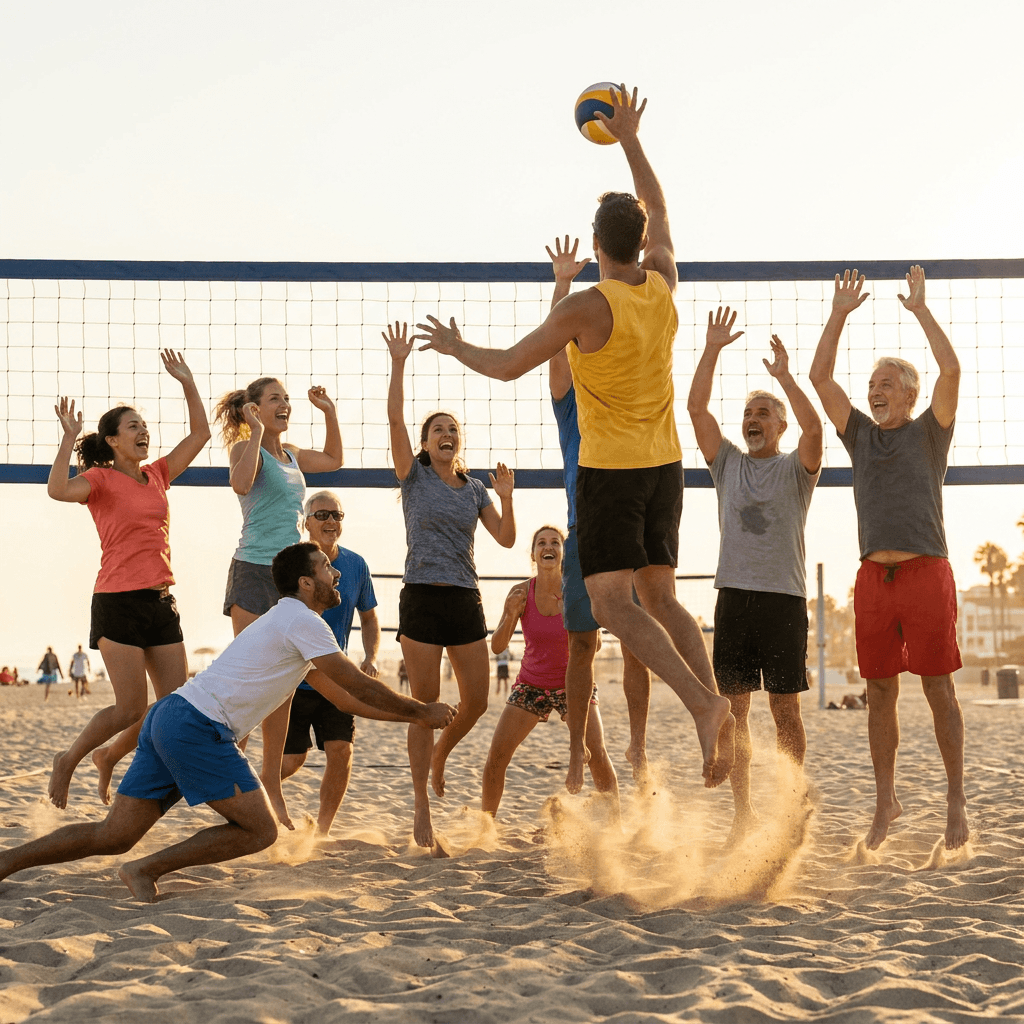
What Team Building Actually Looks Like
Not trust falls. Not forced fun. Real activities that people actually want to do.



Explore More Team Building Guides
Skip the Setup. Run This Playbook on Actify.
Actify handles scheduling, tracking participation, rewards, and reporting — so you can focus on your team, not logistics.